Almost everything can change a person’s epigenome. It doesn’t have to be a dramatic change or a change that last forever but even simple everyday tasks like exercising changes a person epigenomes to a certain extent.
Epigenetics is a large and broad topic, where there is still a infinite amount of things to yet find out about concerning it. One of the may unknowns that is a little controversial in present time is, whether epigenetics can be passed down to the next generation. This concept is called Transgenerational Epigenetics Inheritance.
It is quite known that epigenetics can affect a child in the womb but making complete sense for the baby is alive and depends on the mother to be healthy enough to carry them. In fact quite commonly in the war (mostly noticed after world war two and people involved in the holocaust), many of the babies being born, were larger and overweight throughout their life. This is because during the war, may women would not have as healthy of a lifestyle due to the poor condition. For instance, many were malnourished from the lack of food. The baby then through epigenetics blocked some of the activity that allows them to have a faster metabolism and break down fats more efficiently for their body was trying to protect them from any future events as such. Therefore, once they were born and the war was over, even of they ate regular meals, their body was used to storing more fat making some more overweight in case the body ever had to face long periods of hunger again.
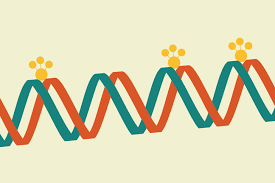
Many people believe that this will then affected the next generation as well, but there is not enough concrete in formation to truly prove it.
The thought around that idea is that many common genetic traits such as addiction, mental illnesses, and so on are also closely linked to epigenetics, but that doesn’t mean that all are solely based on epigenetics. So far, there is no way of knowing if these traits were inherited genetically through regular bad luck alleles, or were inherited by epigenetically altered genes.
Up to date, there has been no study done with concrete results. Some sources may say otherwise but it is not necessarily true. For instance, an experiment can be done hundreds of times and only turn up right ten of those hundreds of times. The probability that these results were fluks, or purely coincidental rather than a true result are quite large. After all, any numbers can be turned to mean or say anything someone wants. For instance, as a McGill professor Jonathan Gerry explained in one of his videos concerning epigenetics, these kinds of experiments are the same thing as saying that “if your sisters grandpas mistress was a smoker, your aunts in law second great cousin nephew may consequently have a cough at the age of 50”, showing that the positive results are coincidences and probably have no relationship to one another.
In the end, epigenetics is a huge subject where there is yet plenty to find out about. In the past, currently, and most likely in the future they will keep on studying what epigenetics is and what it causes. For now, what is most prevalent and the biggest challenge in epigenetics, is to see if transgenerational epigenetics inheritance is real with concrete and actual proof.
Thank you for reading! if you have any questions and/or comments please leave them down below.
-Maggie Claus
 Maggies genetic project