What is the difference between a normal bee and a queen bee? What decides which bee gets to be the leader of the hive or just a normal working bee?
The way queen bees are made, is no random selection, or a mutation. In fact, the only thing that sets the queen bees apart from the other bees is epigenetics. Epigenetics is the mechanism of genetic expression. Specifically meaning, the process of genes being shut on and off therefore, some genes will be read/performed, or ignored.

It Starts off when a colony of bees decide that they need queen. From there on, the current queen chooses a few larvaes of the ones she lays to make them the queens.
Next, the queen bee larvaes and the regular larvaes are fed. At the beginning, all of the larvaes are fed the same food: protein, and amino acid-rich secretion (produced by glands in mouths of young working bees). Soon after the working bee larvaes are weaned meanwhile, queen bees are fed until they “hatch”.
Now for the Genetic part of it…
On this planet, many living things such and animals, plants, humans have shockingly similar DNA. One of the things that they have quite similar is the genetic sequence (the order in which the nucleotides are placed). One of the codes that are shared is the methyltransferase (Dnmt3). In a mammal, the methyltransferase is what allows the epigenetic mutation (the turning on and off of genes) to happen.
The methyltransferase molecule is an enzyme that works by attaching to the DNA in certain sections, which then suppresses the activity of that certain gene.
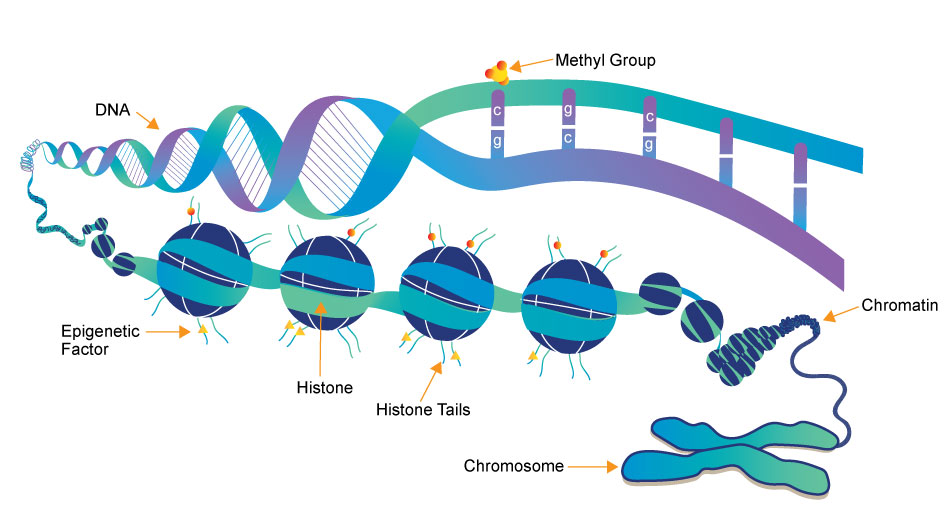
First the DNA methylation regulates and chooses which DNA segments are going to be carried on or suppressed. These regulations include controlling the process of chemicals passing on information signals in the nervous system, and controlling reactions involving fats and proteins. Then the Dnmt3 instructs for the methyltransferase to be made. Next, the methyltransferase attaches to these specific DNA segments. Since a queen bee larvae are fed differently than a working bee larvae, the DNA methylation regulates the genetic material of the queen bee differently than the regular working bee.
All in all, DNA needs direct access to proteins to carry out their task, and epigenetics is when this connection is lost (sometimes temporarily and sometimes permanent) therefore, the genetic coding can not be fully or partially carried out.
This specific case of epigenetic mechanisms with the Dnmt3 and methyltransferase, usually happens before birth explaining why queen bees are born to be queen and do not become bees throughout their lifetime.
What does all of this change for the queen bee?
Most evidently, the epigenetics causes the queen bees too look completely different: smooth and larger bodies, longer legs, and so on. The effect of epigenetics allows the queen bee to be able to use her stinger more than just once and live for much longer than a regular working bee. In fact, queen bees can live for several years while normal working bees usually die after just a few weeks of living.
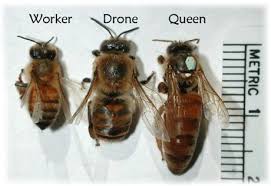
One of the bigger things that differentiates queen bees from working bees is, the queen can lay both female and male larvaes, usually making them the main bee to lay eggs in a hive (because they can mate). This also means that, the queen is the only one that gets to decide who will be what (a queen, worker, or a drone). The reason for this is that working bees cannot mate (unlike queen bees) therefore, they can only produce drones (male bees) and drone bees can not produce anything except sperm.
As a final thought…
In the end, the difference of a queen bees and a regular bees does not come from the difference in their DNA. In fact, their DNA is exactly the same (the same way all human DNa is the same). the only difference is that the genes that are expressed in a queen bee are different than the ones of a working bee. In the end queen bees tend to be stronger and wiser than a regular bee making it evident that being fed well as a larvae can make a big difference in how genes are expressed more positively.
If you have any further questions please feel free to ask in the comment. Thank you for reading,
-Maggie Claus
 Maggies genetic project