1. If one set of identical twins have offsprings with another set of identical twins, the children are genetically siblings, but are socially cousins. This is because, aside from life alterations through epigenetics, identical twins have the exact same genetic material. Therefore, the children of the different sets of parents, have the same possibilities range of alleles to be passed down making them genetically equivalent to siblings.
2. There is a very rare genetic disease that makes a person’s skin blue. It is called methemoglobinemia. This is a recessive non-sex linked trait. It is also more common between intermarriage. In fact, there is a blue skinned family in Kentucky by the name Fugates.


3. The reason as to why the famous Elizabeth Taylor had such beautiful eyes was caused by a genetic mutation. Taylor had distichiasis. Distichiasis is caused by a mutation in the FOXP2 gene causing the person to have a double row of eyelashes making their eyelashes more voluminous.
4. Sickle cell anemia is a a blood disease of when a person’s blood cells become crescent shaped therefore, get stuck in small blood vessels and slow/stop the flow of oxygen to other body parts. This disease is simply caused by a point mutation, meaning a single change in a base pair. It is also more common in african descent and a carrier of sickle cell anemia, becomes immune malaria parasites.
5. People with blue eyes most likely have an ancestor in common 6 000-10 000 years ago that had a genetic mutation causing blue eyes.
6. Around 10% of europeans are resistant to HIV. This is thanks to a disease in the middle ages. This genetic mutation is CCR5-Delta32 . It can also happen in africans and asians but it is not nearly as common.
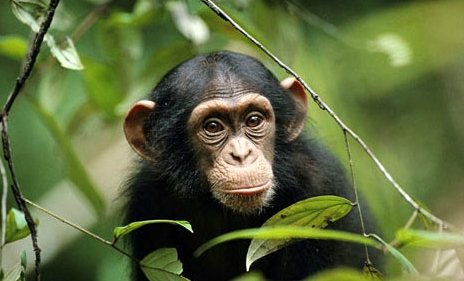
7. Humans and chimpanzees share around 96% of the same DNA. this is because they are the closest relatives to humans that we know of. Despite the close relation, a group of 55 chimpanzees, has twice the genetic variability of all humans combined (in West Africa).
8. Tetrachromacy is a genetic mutation that is found mostly in women. This causes them to have four different types of cone cells instead of the regular three cone cells. Therefore, people with tetrachromacy can see upto 100-million colours, instead of around the 1-million colours that regular humans can see.
-Maggie Claus
 Maggies genetic project